



The most important macro development of the 2020–2030 cycle isn’t inflation, interest rates, or debt levels.
It is this:
The United States is transitioning from a Federal Reserve–dominant regime to a Treasury-dominant regime.
This is the core of Scott Bessent’s framework —
a blueprint in which monetary power, liquidity creation, and economic direction move out of the Fed’s technocratic orbit and into the Treasury’s political, fiscal, and strategic orbit.
Project Genesis is the technological infrastructure that makes this transformation irreversible.
This chapter explains:
Why the shift is happening now
How the Treasury gains effective control over liquidity
The role Genesis plays as the new state-capacity accelerator
What this means for markets, credit, and asset pricing

I. Why the Federal Reserve Lost Primacy
Since 2008, the Fed has relied on:
QE
ZIRP
forward guidance
bank reserves manipulation
short-rate targeting
to stabilize the system.
But several structural failures broke the Fed’s monopoly on macro management:
1. QT cannot run in a highly indebted system.
Every attempt at QT ends with:
repo market stress
Treasury market dysfunction
liquidity shortfalls
collateral scarcity
“unusual and exigent” Fed facilities
QT is now performative.
It can never be permanent
.
2. The Fed cannot control inflation without breaking the Treasury market.
Raising rates reduces inflation but increases:
interest expense
refinancing pressure
deficit blowouts
supply/demand mismatches in UST auctions
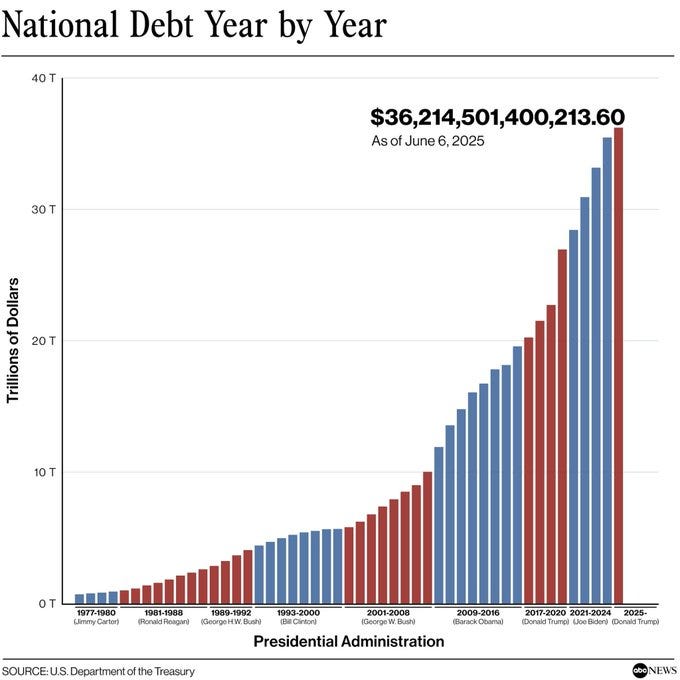
At ~$35 trillion in debt, monetary tightening is a fiscal threat.
The Treasury cannot allow this.
3. The Fed’s models broke — publicly.
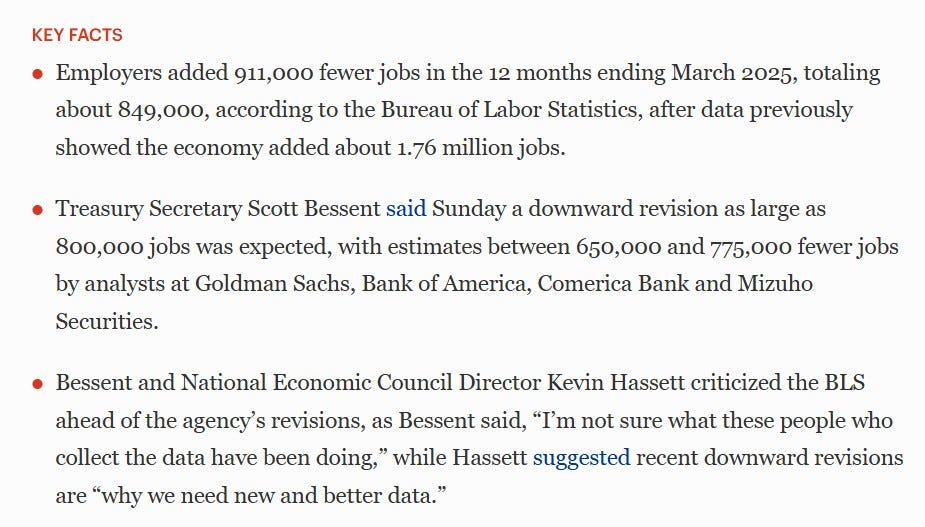
The 2024–2025 unemployment revision (-1.7 million jobs) revealed:
misreported labor conditions
faulty real-time data
overestimated inflation persistence
underestimated labor softness
This shattered the “data-driven” veneer of independence
.
4. The Fed cannot run industrial policy; the Treasury can.
America’s economic future now depends on:
AI
semiconductors
quantum
biotech
critical materials
advanced manufacturing
fusion
These require fiscal tools, not monetary tools.
5. Politically, the public blames the Fed for inflation.
And Washington needs a scapegoat.
The path was set:
Monetary power must move somewhere else.
It moves to the Treasury.
II. The Treasury’s Ascendance: The Bessent Doctrine
Scott Bessent’s framework is bold but logical:
In the 2020s, the Treasury becomes the true center of economic management — with the Fed as an operational arm, not a policymaking authority.
This happens through five mechanisms:
1. Fiscal Dominance
Treasury spending drives economic outcomes; the Fed sterilizes around it.
industrial policy
tariff policy
defense + national security directives
reshoring incentives
infrastructure build-out
subsidies for strategic technologies
Markets no longer react to Fed minutes — they react to:
Treasury issuance
Treasury buyback announcements
fiscal packages
industrial policy directives
White House economic orders
2. The Treasury Becomes the Real Liquidity Provider
Through:
deficit spending
tax policy
auction schedules
cash balances (TGA)
targeted subsidies
credit guarantees
direct transfers
state-capacity spending (via Genesis domains)
The Fed influences liquidity.
The Treasury creates it.
3. Treasury Controls the Most Important Asset in the World: USTs
Control the collateral → control the financial system.
Treasuries are the base layer for global collateral
Repo markets depend on UST supply
U.S. banking system capitalization depends on UST values
Derivatives use USTs as margin backbone
Foreign central banks hold trillions of USTs
When the Treasury controls supply, maturity, and issuance strategy, it controls:
rates
liquidity
risk premiums
cross-asset valuations
Not the Fed.
4. Treasury Integration into National Security
Treasury sanctions already weaponize:
dollar settlement
cross-border payments
asset freezes
sovereign liquidity
Genesis now extends that power into the technological domain:
AI-directed materials discovery
autonomous manufacturing
energy resilience
synthetic biology
semiconductor independence
Economic security = national security.
Treasury = national security institution.
5. Treasury Becomes the Allocation Engine of the AI Economy
Genesis enables:
state-directed R&D
state-directed compute allocation
state-directed data integration
state-directed scientific acceleration
The Fed cannot allocate resources.
The Treasury now can — at compute speed.
This is the final brick in fiscal dominance.
III. Project Genesis — The Technological Engine of Treasury Dominance
Genesis is the most misunderstood Executive Order of the decade.
Commentators framed it as:
a science initiative
a national lab upgrade
an AI research platform
But its true function is far more consequential:
Genesis is the infrastructure the Treasury will use to run a 21st-century, AI-accelerated fiscal-industrial state.
It creates:
1. A unified national compute platform (supercomputers + secure cloud)
Capable of training:
scientific foundation models
energy models
materials models
biology models
defense simulation models
This improves state capacity and reduces private-sector bottlenecks.
2. The largest integrated dataset in human history — centralized under DOE/Treasury alignment
Genesis unifies federal datasets across:
energy
health
defense
space
climate
materials
nuclear
manufacturing
agriculture
This is sovereign AI data power.
3. AI agents that can run autonomous research pipelines
This compresses:
years of R&D → weeks
months of testing → hours
The Treasury controls the scientific acceleration curve.
4. AI-directed production and manufacturing facilities
Automation becomes a policy instrument.
This enables:
reshoring
supply chain sovereignty
energy dominance
semiconductor independence
Treasury power grows with each capability.
IV. How Genesis and Bessent Reshape Liquidity
The old liquidity model:
Fed cuts rates
QE buys bonds
markets rally
The new liquidity model:
Treasury spending + Genesis industrial policy + Fed accommodation = Structural liquidity expansion
Genesis requires decade-scale capital flows, which means:
constant fiscal outlays
multi-year capex cycles
strategic subsidies
national-scale investment
stable (low) real yields
Treasury issuance shaped around capital needs
This forces the Fed into the passenger seat:
The Fed cannot run tight monetary policy while Genesis needs capital.
The Fed cannot maintain high real rates while Treasury issues trillions.
The Fed cannot prioritize CPI over national security R&D.
Liquidity is now a fiscal instrument, not a monetary instrument.
V. Markets in the Treasury-Genesis Regime
In this new regime:The Treasury determines the direction of liquidity
Genesis determines the direction of growth
The Fed manages plumbing and optics
The implications are enormous:
Bond markets follow issuance patterns, not Fed projections
Equities follow fiscal-industrial flows, not EPS revisions
AI, energy, semiconductors, defense become permanent bid sectors
Cyclicality becomes dominated by fiscal cycles
Liquidity shocks are resolved through fiscal levers, not monetary levers
BTC becomes a liquidity barometer, not a risk asset
Markets become policy assets, not “discounted cash flow assets.”
VI. The Narrative Architecture Protecting Treasury Power
The White House framed Genesis as:
a Manhattan Project
a national AI mobilization
a scientific renaissance
a competitiveness initiative
a national security imperative
These narratives accomplish three goals:
Make large fiscal spending politically unquestionable
Justify permanent Treasury liquidity programs
Define the Fed as a technical tool, not a policymaker
This is why the narrative matters:
To shift monetary power, you must shift the story about who saves the nation.
Genesis gives Treasury the hero story.
VII. The Irreversible Nature of the New Regime
Once the U.S. government:
builds national AI supercomputers
integrates federal datasets
automates scientific discovery
ties industrial policy to AI
commits multi-decade spending to strategic tech
retools the economy around compute + energy + materials
relies on fiscal spending to support those commitments
…then the Fed can never again be the primary macro authority.
The Treasury becomes:
the allocator
the architect
the liquidity engine
the capital conductor
the economic mission command
Genesis is the state-capacity amplifier.
Bessent is the strategist.
The Fed is the custodian of plumbing.
This is the new macro regime.
VIII. The Chapter 2 Summary
1. The Fed has lost control because its tools no longer match national needs.
2. The Treasury is ascending through fiscal dominance + strategic industrial mandates.
3. Project Genesis is the technological and data backbone of this new regime.
4. Liquidity cycles are now driven by Treasury actions, not the FOMC calendar.
5. Asset markets have become fiscal-industrial policy instruments.
6. The new macro order is permanent, not cyclical.
NEXT UP: Chapter 3
Chapter 3: The Genesis Mission: The Birth of the Fiscal-AI Industrial State
(How Project Genesis Becomes the Operating System of Treasury Dominance)
Project Genesis is being sold as a science initiative, an innovation accelerator, a national AI platform.
The Mechanisms of Fiscal Liquidity Creation
How TGA, issuance, tariffs, and subsidies become new monetary tools
How Genesis creates decade-long liquidity requirements
And where the next asset booms originate (AI, energy, materials, BTC, defense)
-ICT
****If you find this research useful, I’d be grateful if you considered subscribing.
Your support directly helps fund deeper modeling and thoughtful breakdowns of emerging digital-asset structures like this one.
Subscriptions genuinely make this work possible — and sincerely appreciated.


